Duolingo tinycards
ux/ui
5 weeks
language learning
studio project
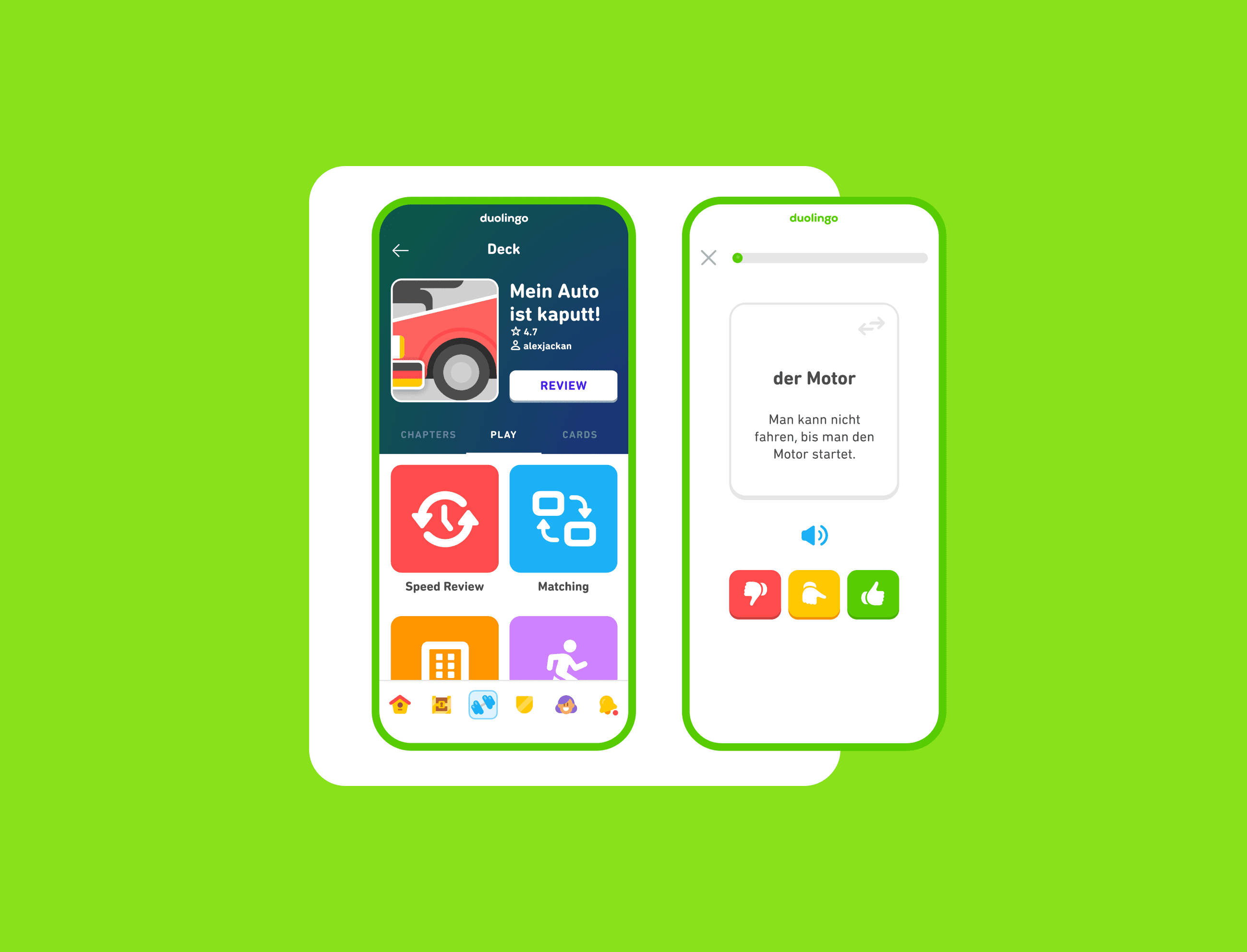
What would it look like to bring back a cult classic feature?
THE PROBLEM
Users Can't Retain the Language They're Learning
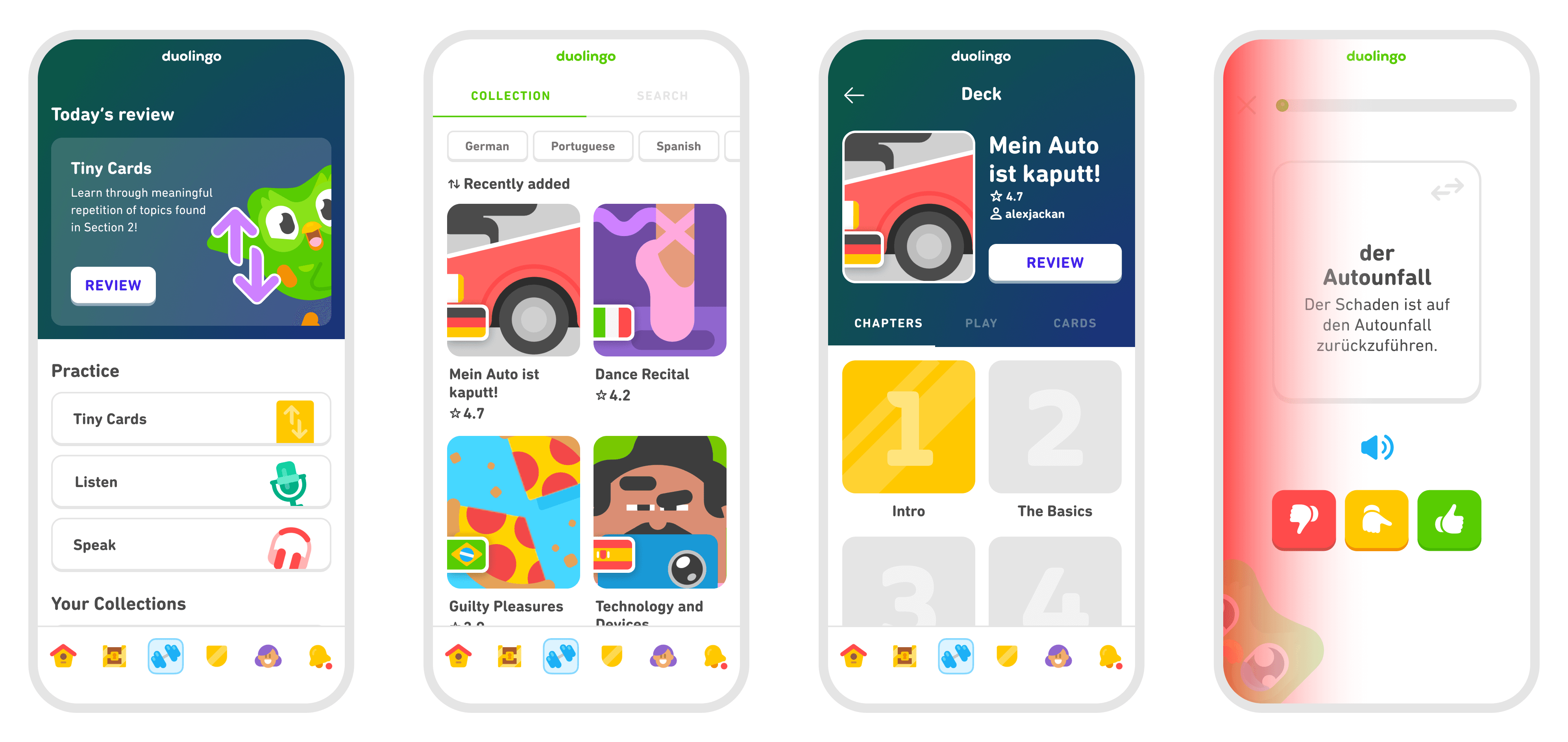
The absence of a flashcards feature, crucial for information retention, stands out as a user concern. Users also express a desire for Duolingo to explore more advanced language aspects, suggesting a marketplace-like system for user-generated content. Addressing these issues could enhance Duolingo's efficacy, offering a comprehensive language learning experience and maintaining its prominent position in the language learning landscape as the leader of fun.
THE SOLUTION
Utilizing Repetition to Learn Fast
BACKGROUND
Duolingo's Unique Edge
"Our expertly-designed courses might make it feel like a game, but there is real learning science happening behind the scenes! Our learning and teaching experts use international language proficiency standards, the CEFR, to guide course creation, and we also use AI to adapt the difficulty level of your lessons based on your progress, so that you're seeing exercises at the right level for you.”
Challenge
Gamification at Risk?
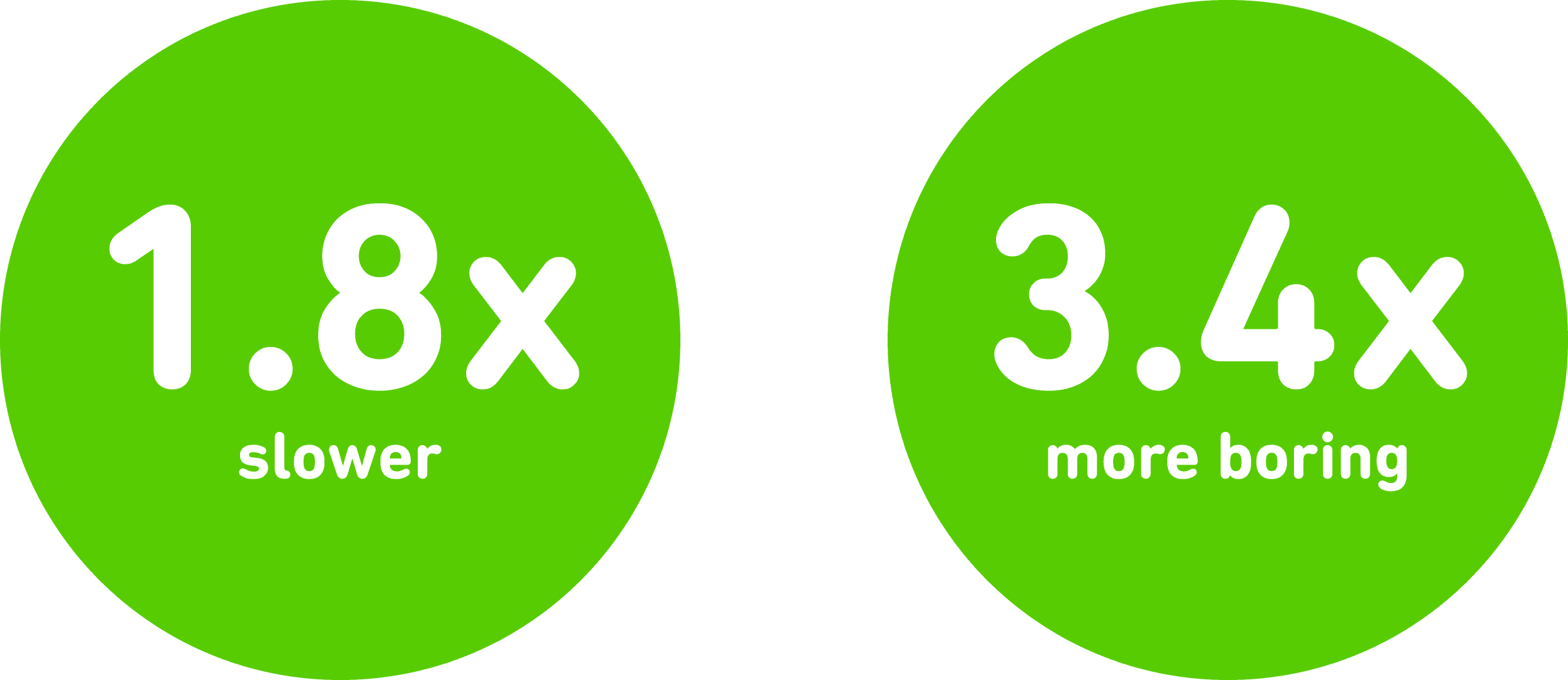
Studies, such as Alister Houghton's analysis on relativeinsight.com suggest that users have become more bored with Duolingo since the 2023 Q2 update.
User feedback
Users want a quicker and more efficient way to learn a language without sacrificing fun
Through conducting secondary research, I found that users were unhappy with the current learning path.
Anonymous: “With long term use, it becomes clear that the app only gives you the very basic[s] of each language”.
u/ZhangtheGreat: “I would love to see Duolingo bring [Tinycards] back or integrate it into the main app… A complementing flash cards app or feature would be the best.”
user mapping
A Journey Towards Disengagement
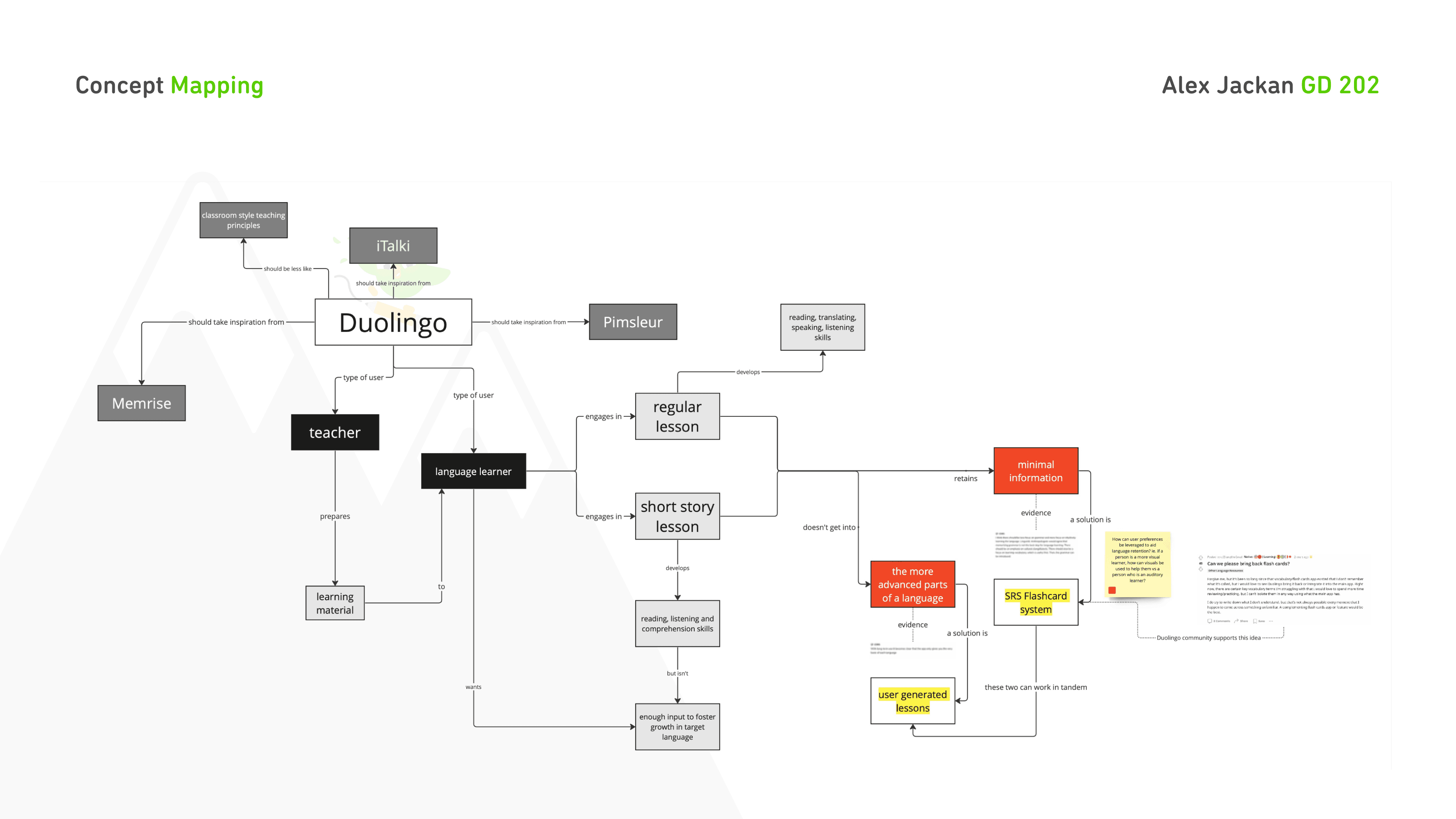
Based on the research done thus far, I then mapped out where Duolingo learners might land along their language learning journey.
user flow
The Current Learning Path is Slow and Frustrating
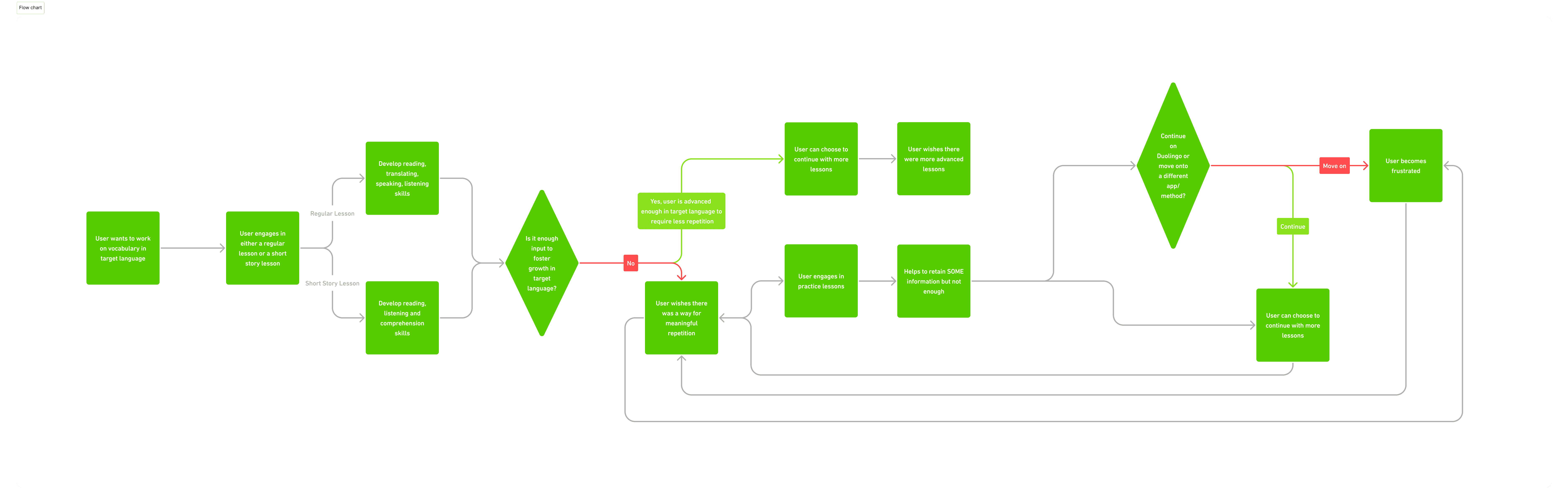
Building off of the user map, I developed a user flow that illustrates the relationship between different features and functionalities within Duolingo as it is now, showcasing how a user may decide that Duolingo isn't the right fit for them.
New user flow
Keeping Users Engaged
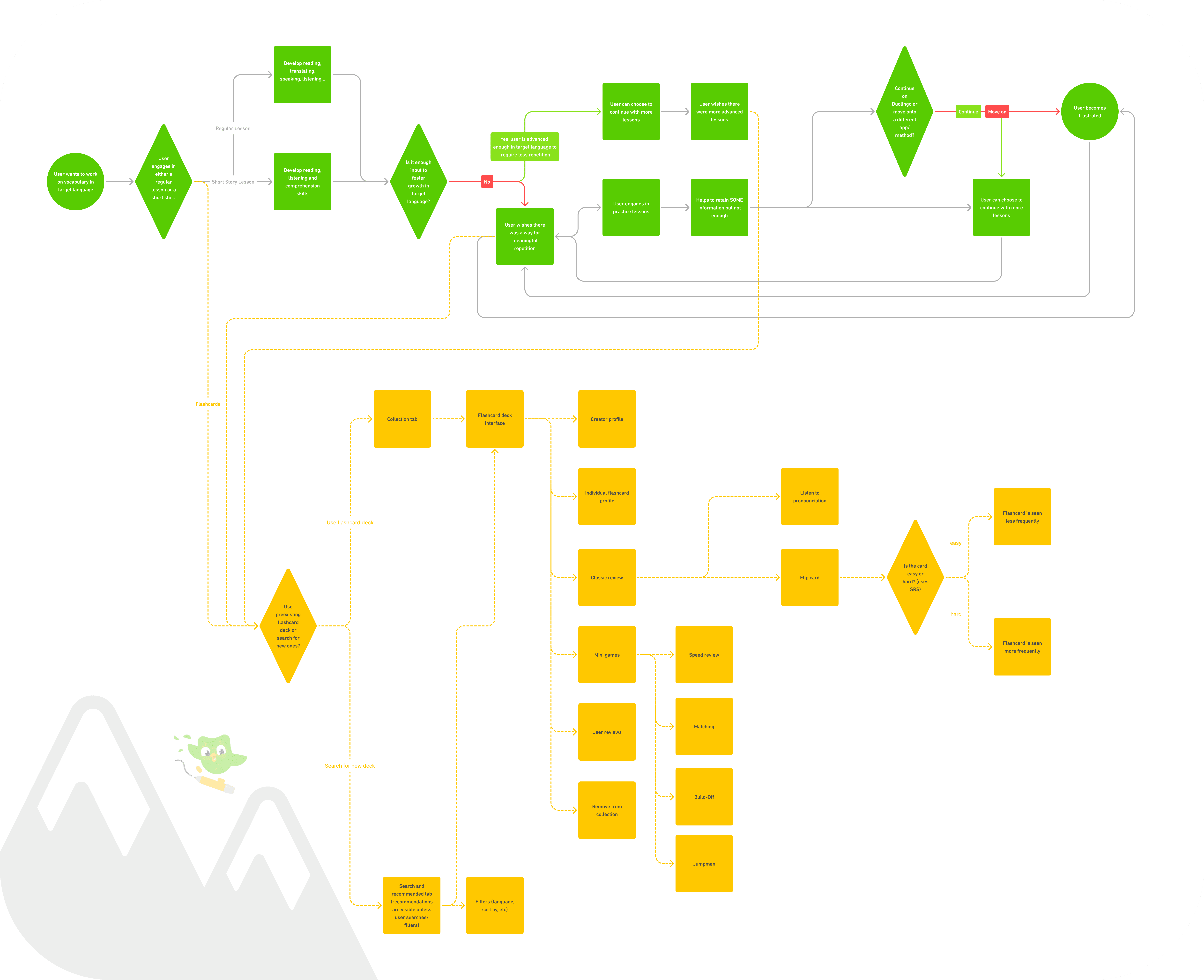
Following the scenario mapping workshop, we generated a good amount of ideas to move forward with. Here are the key items that we decided to flesh out.
LOW FIDELITY WIREFRAMES
Tinycards Comes to Life
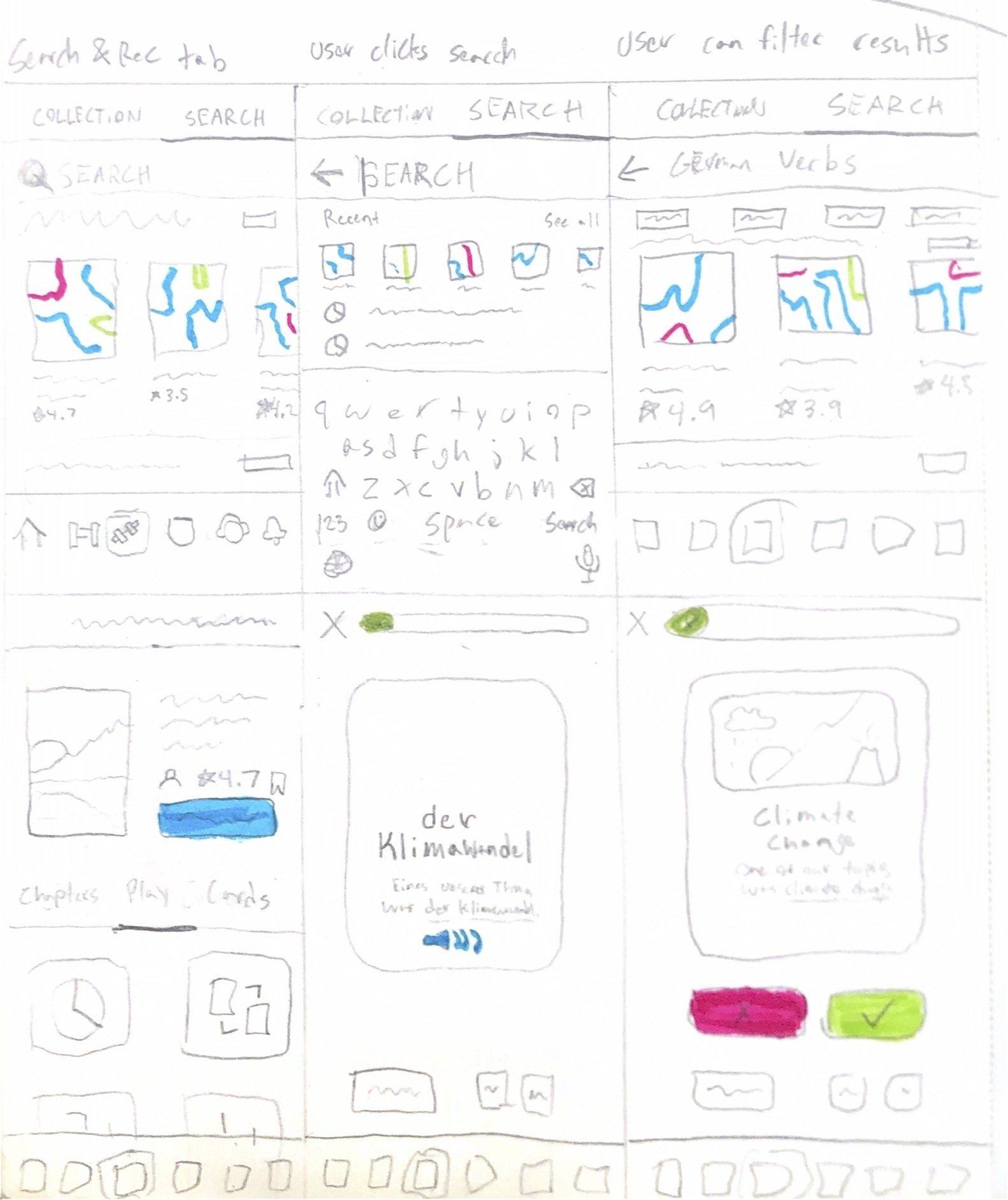
Some feedback that I received on these wireframes:
Ensure that there are options for flashcards that feel "in-between" right and wrong. If you don't fully understand a flashcard but still have a gist, there should be an option for this.
Keep the playfulness of Duolingo — how can you make it gamified?
How will the progress indicator work on a flashcard deck?
USABILITY TESTING AND IMPROVEMENTS
Three Major Improvements in My Design and the Importance of Visual Cues
Throughout this process, I noticed a common trend. Visual cues.
Added gamified elements, such as Duo pop-ups
User feedback suggested that cues to emphasize the act of "answering" a card was missing some sort of indication.
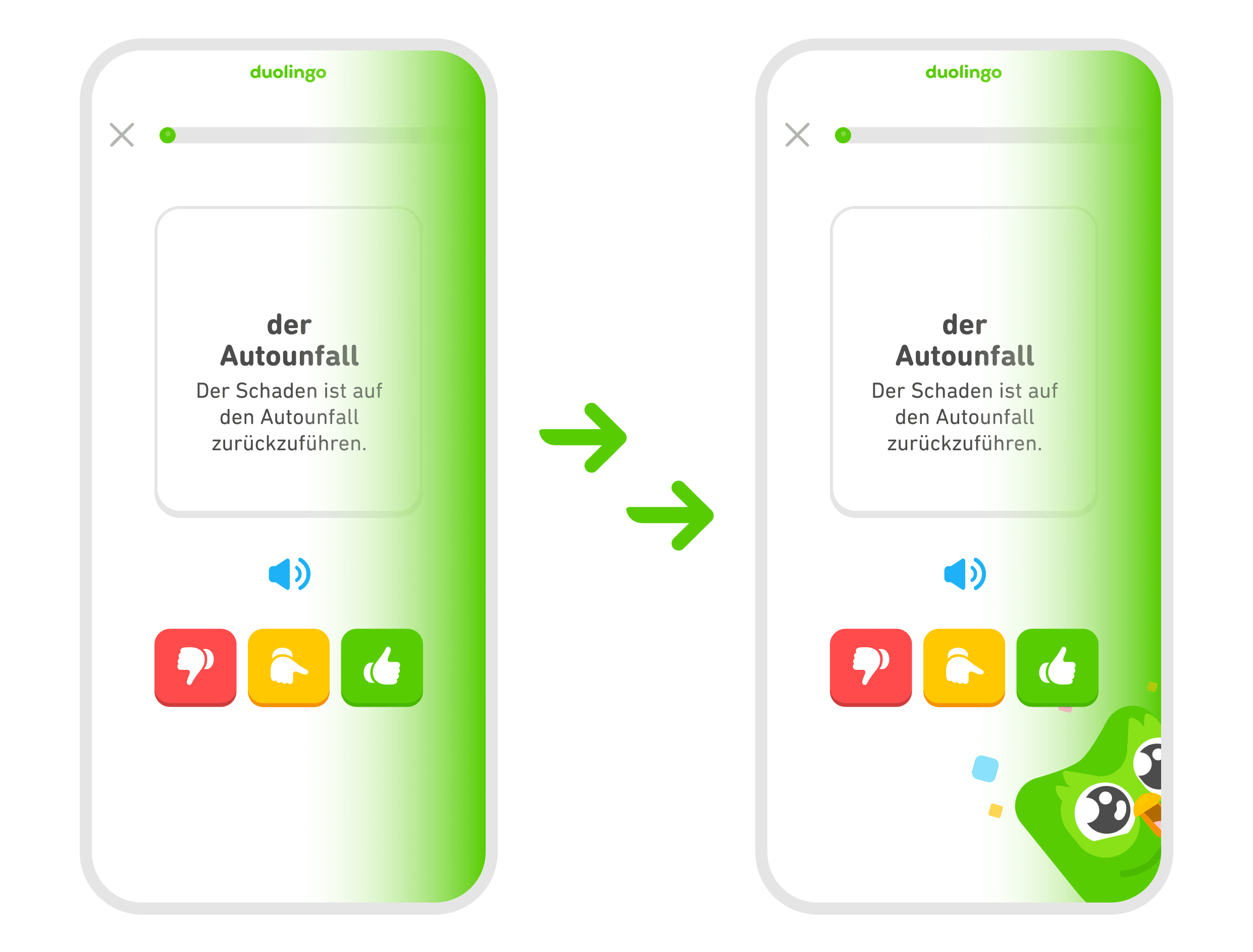
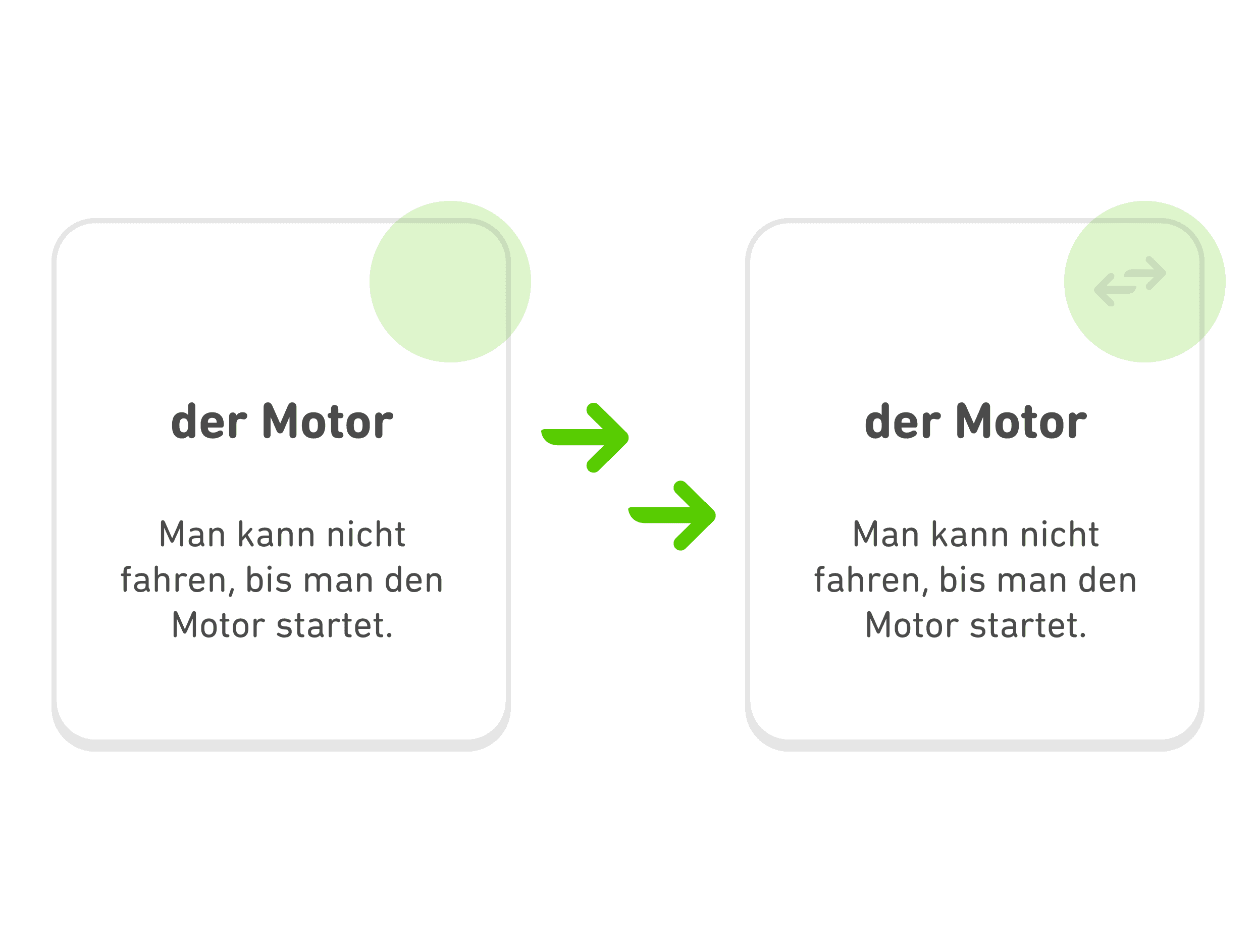
Created clear card-flip actions and indicators
It was important to make this action clear through icons and interactive card-flipping animations.
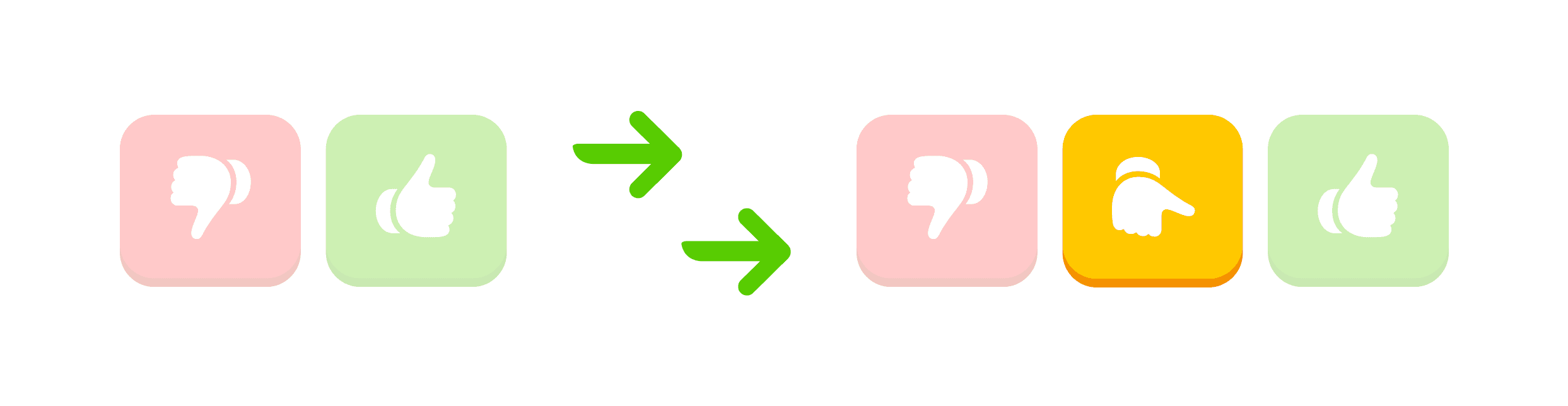
Included an "unsure" option for cards that users feel in-between about
Adding features that reassure users on words stuck in between familiarity and long-term memory is vital.
FINAL SCREENS
Tinycards: Utilizing Repetition to Learn Fast
REFLECTIONS
Creating Patterns for Language Growth
This case study taught me a lot about how user's retain information and the patterns that can potentially aid or disrupt this. Through incorporating Duolingos' core value of gamification into developing and delivering the new Tinycards feature, users can review words they may have otherwise forgotten.
Duolingo tinycards
ux/ui
5 weeks
language learning
studio project
What would it look like to bring back a cult classic feature?
The absence of a flashcards feature, crucial for information retention, stands out as a user concern. Users also express a desire for Duolingo to explore more advanced language aspects, suggesting a marketplace-like system for user-generated content. Addressing these issues could enhance Duolingo's efficacy, offering a comprehensive language learning experience and maintaining its prominent position in the language learning landscape as the leader of fun.
THE PROBLEM
Users Can't Retain the Language They're Learning
THE SOLUTION
Utilizing Repetition to Learn Fast
BACKGROUND
Duolingo's Unique Edge
"Our expertly-designed courses might make it feel like a game, but there is real learning science happening behind the scenes! Our learning and teaching experts use international language proficiency standards, the CEFR, to guide course creation, and we also use AI to adapt the difficulty level of your lessons based on your progress, so that you're seeing exercises at the right level for you.”
Challenge
Gamification at Risk?
Studies, such as Alister Houghton's analysis on relativeinsight.com suggest that users have become more bored with Duolingo since the 2023 Q2 update.
User feedback
Users want a quicker and more efficient way to learn a language without sacrificing fun
Through conducting secondary research, I found that users were unhappy with the current learning path.
Anonymous: “With long term use, it becomes clear that the app only gives you the very basic[s] of each language”.
u/ZhangtheGreat: “I would love to see Duolingo bring [Tinycards] back or integrate it into the main app… A complementing flash cards app or feature would be the best.”
user mapping
A Journey Towards Disengagement
Based on the research done thus far, I then mapped out where Duolingo learners might land along their language learning journey.
user flow
The Current Learning Path is Slow and Frustrating
Building off of the user map, I developed a user flow that illustrates the relationship between different features and functionalities within Duolingo as it is now, showcasing how a user may decide that Duolingo isn't the right fit for them.
New user flow
Keeping Users Engaged
Following the scenario mapping workshop, we generated a good amount of ideas to move forward with. Here are the key items that we decided to flesh out.
LOW FIDELITY WIREFRAMES
Tinycards Comes to Life
Some feedback that I received on these wireframes:
Ensure that there are options for flashcards that feel "in-between" right and wrong. If you don't fully understand a flashcard but still have a gist, there should be an option for this.
Keep the playfulness of Duolingo — how can you make it gamified?
How will the progress indicator work on a flashcard deck?
USABILITY TESTING AND IMPROVEMENTS
Three Major Improvements in My Design and the Importance of Visual Cues
Throughout this process, I noticed a common trend. Visual cues.
Added gamified elements, such as Duo pop-ups
Created clear card-flip actions and indicators
Included an "unsure" option for cards that users feel in-between about
FINAL SCREENS
Tinycards: Utilizing Repetition to Learn Fast
REFLECTIONS
Creating Patterns for Language Growth
This case study taught me a lot about how user's retain information and the patterns that can potentially aid or disrupt this. Through incorporating Duolingos' core value of gamification into developing and delivering the new Tinycards feature, users can review words they may have otherwise forgotten.