SOJO
ux/ui
10 weeks
transportation
group project
How does overcrowding lead to further inconvenience on public transit?
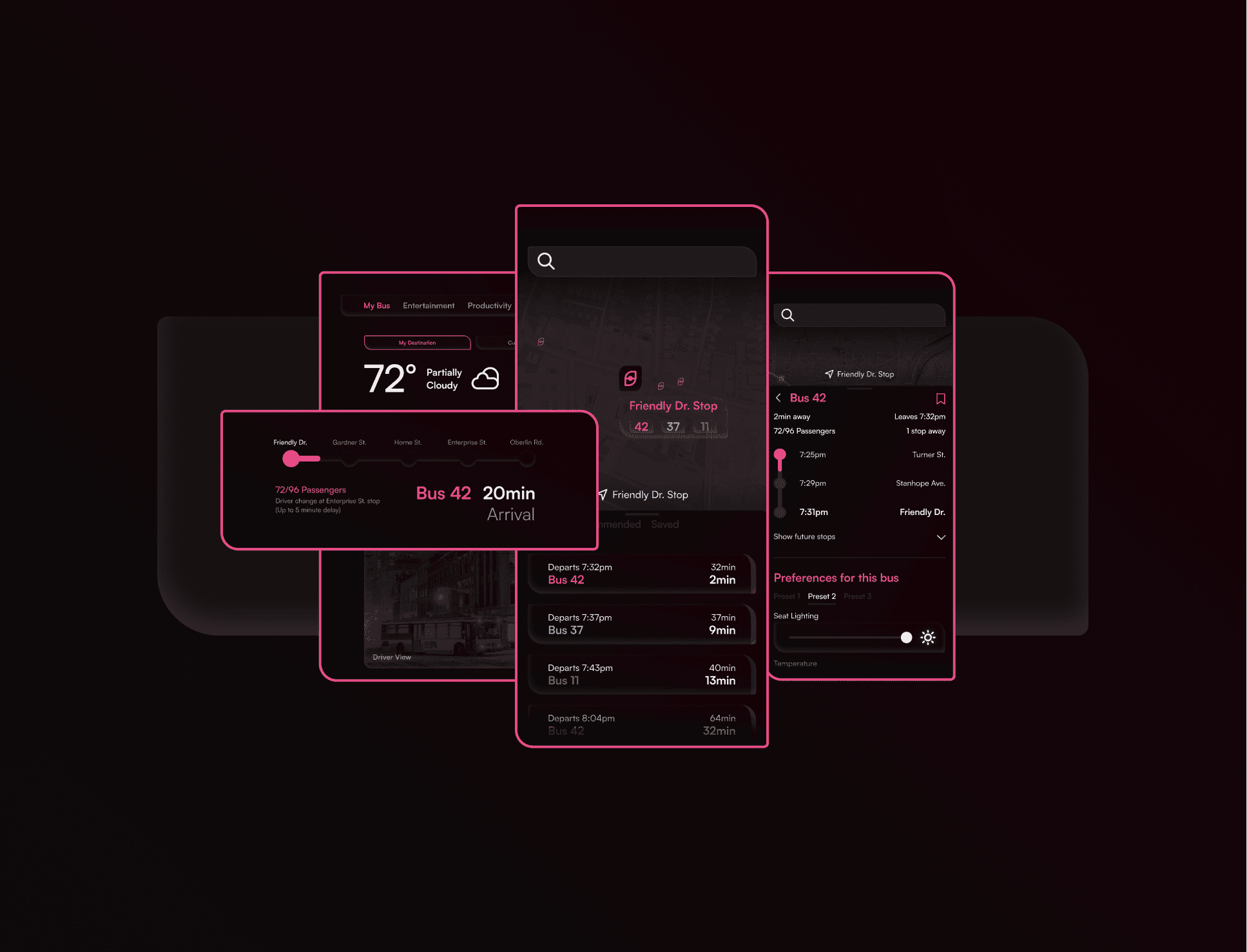
Follow buses with real-time information such as occupancy and schedule times.
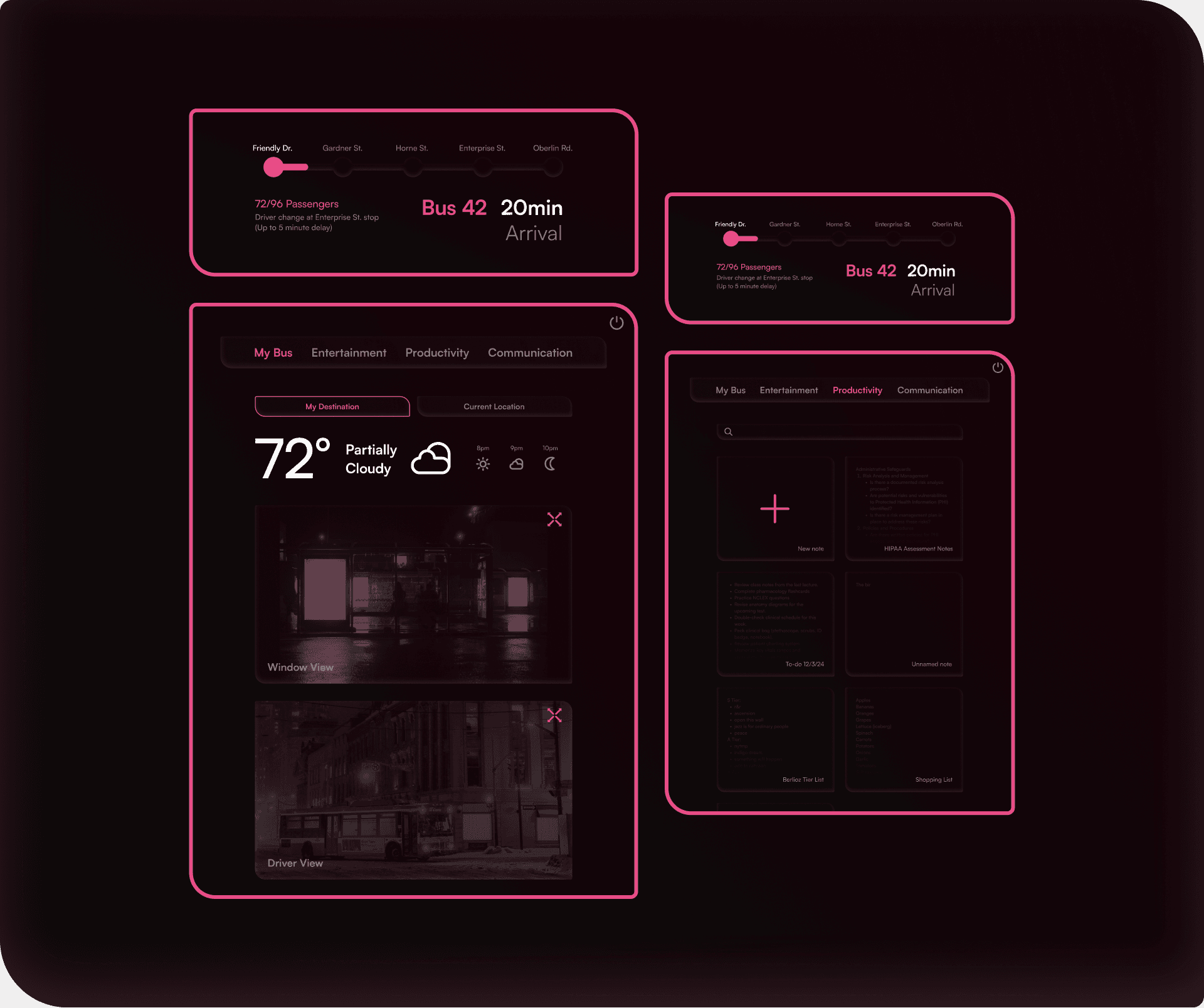
Integrated bus seat entertainment center brings transparency and relaxation to the passenger.
THE PROBLEM
Passengers Feel a Lack of Comfort, Both Physically and Cognitively.
THE SOLUTION
reframing mobility as a beacon of comfort and predictability.
BACKGROUND
An Imperfect Journey
Various studies have proven that the more passengers that are on a bus, the more time gets added onto delays, boarding times, and getting off. In regard to boarding and getting off, cities including Santiago de Chile (Gibson et al., 1997), Chicago (Milkovits, 2008), Dhaka (Katz and Garrow, 2012), Vancouver (Fletcher and El-Geneidy, 2013) and Sydney (Tirachini, 2013) all found this to be the case. Furthermore, when their are few passengers in comparison to bus capacity, there is less waiting time and increased comfort in travel. This is gone further into detail by Oldfield and Bly (1988).
FIELD STUDIES
Observing Passenger Habits
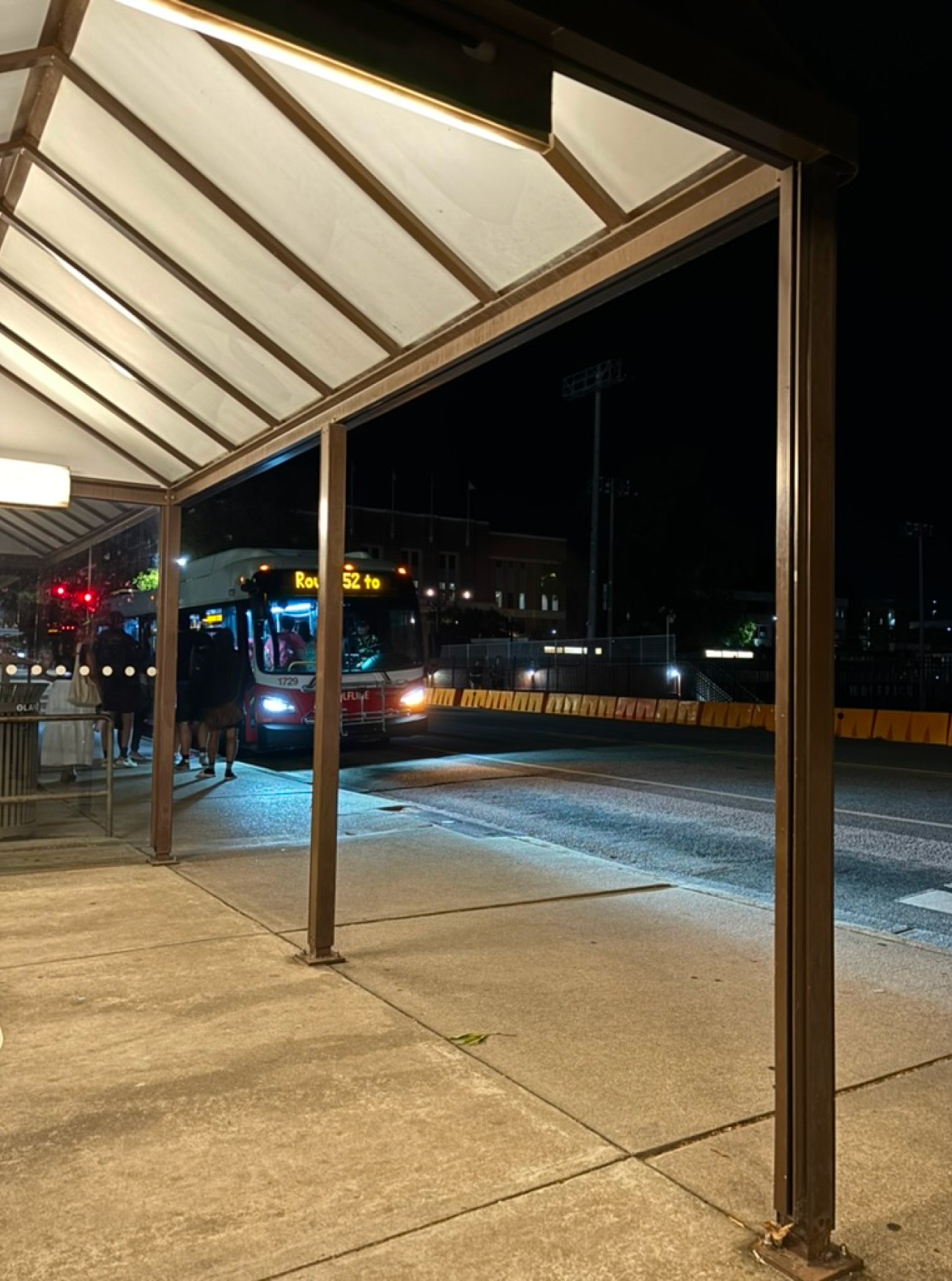
As the bus approaches
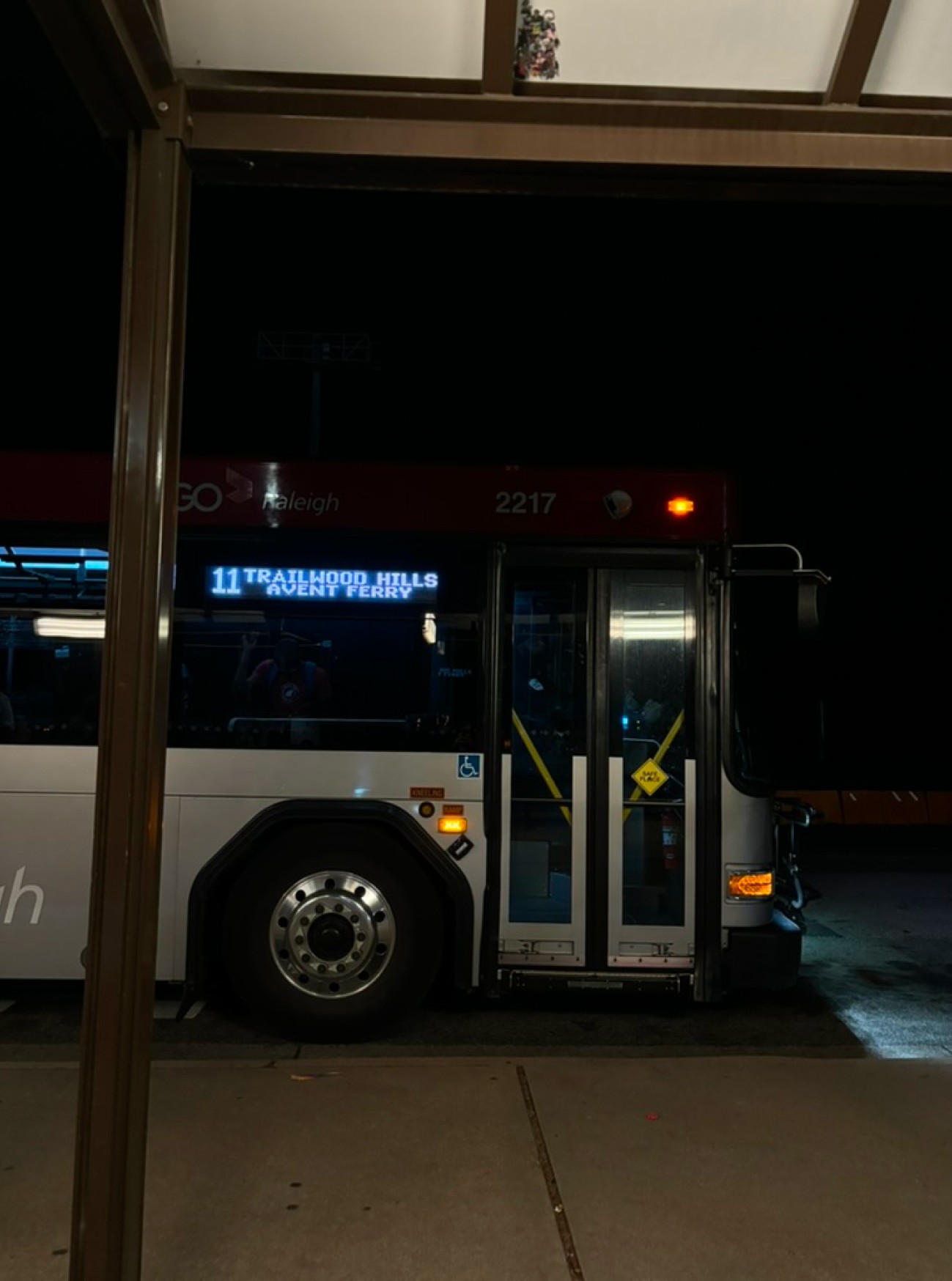
Boarding the bus
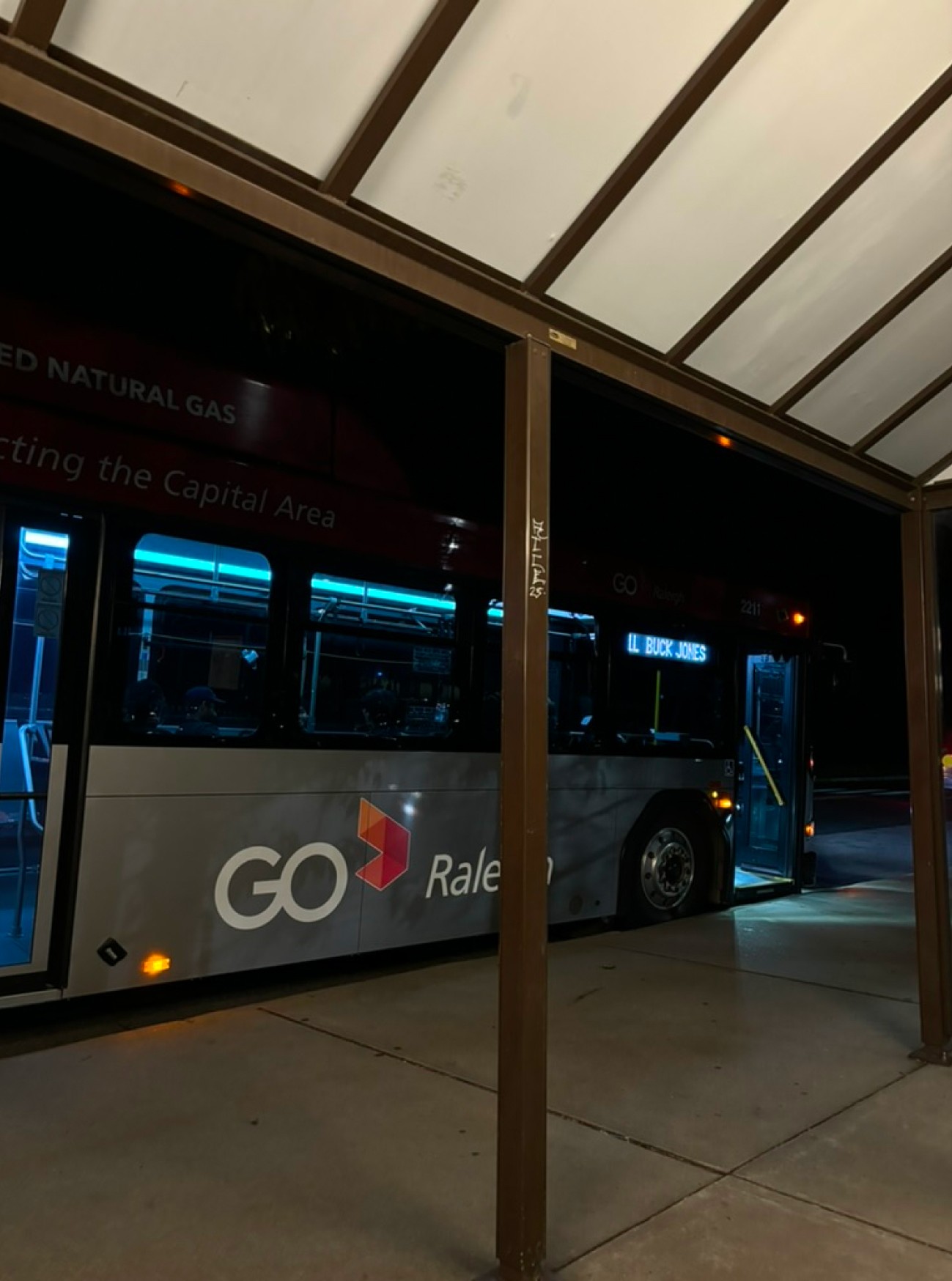
About to depart
Passengers crowd around the front entrance.
Passengers fill up the front of the bus, as there are open seats here.
Bus driver waits for people on street walking by to make sure they’re not getting on, even well after departure time.
USER INTERVIEWS
Efficiency not a Priority for Passengers?
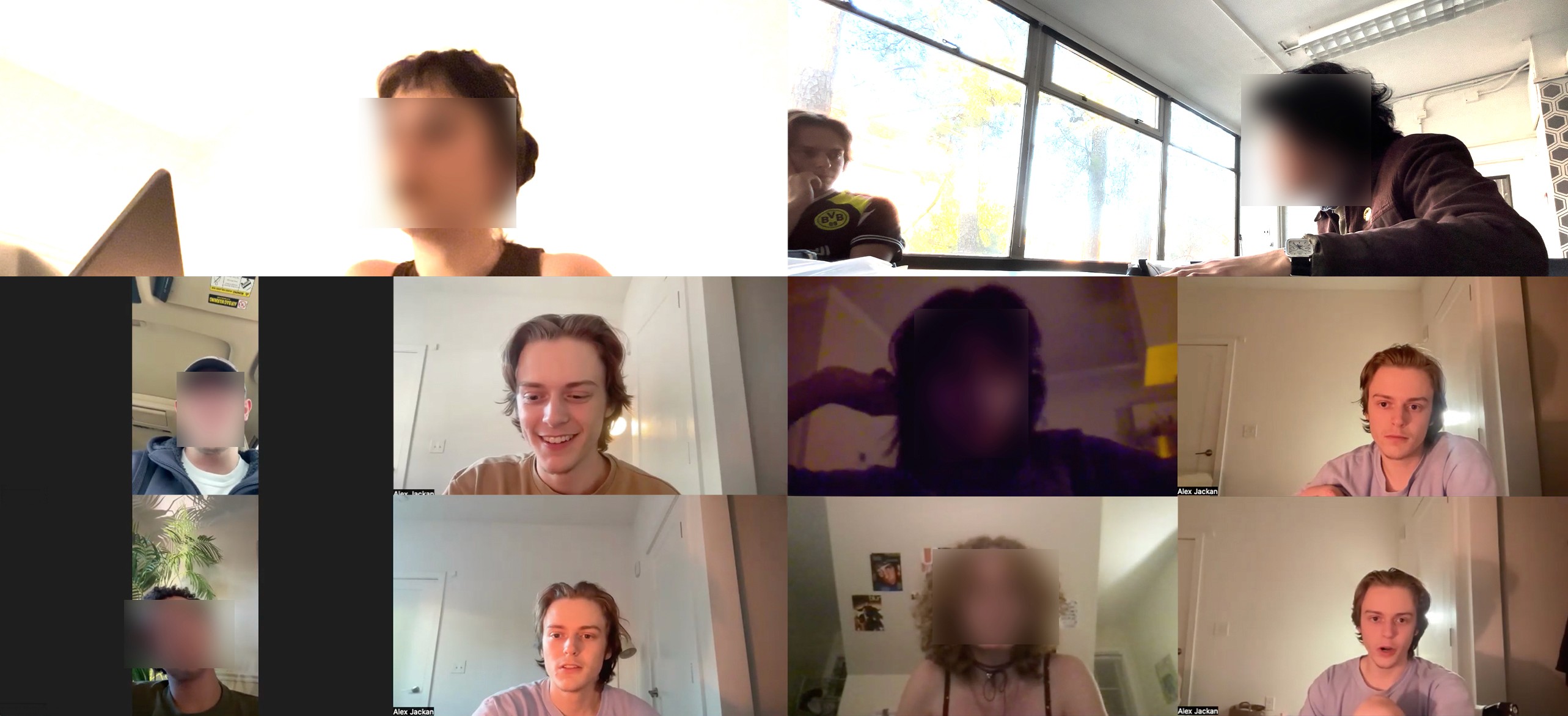
I utilized an interview guide to aid the discussion. Here were some key topics we covered:
Walk me through a typical journey of yours from start to finish of taking the bus.
Can you tell me about a time when you thought something along the lines of “I’m never taking the bus again"?
Tell me about the first time you took the bus and why you decided to take the bus.
Lastly, if there was one thing you could change that would make your experience riding the bus better, what would it be?
EMERGING THEMES
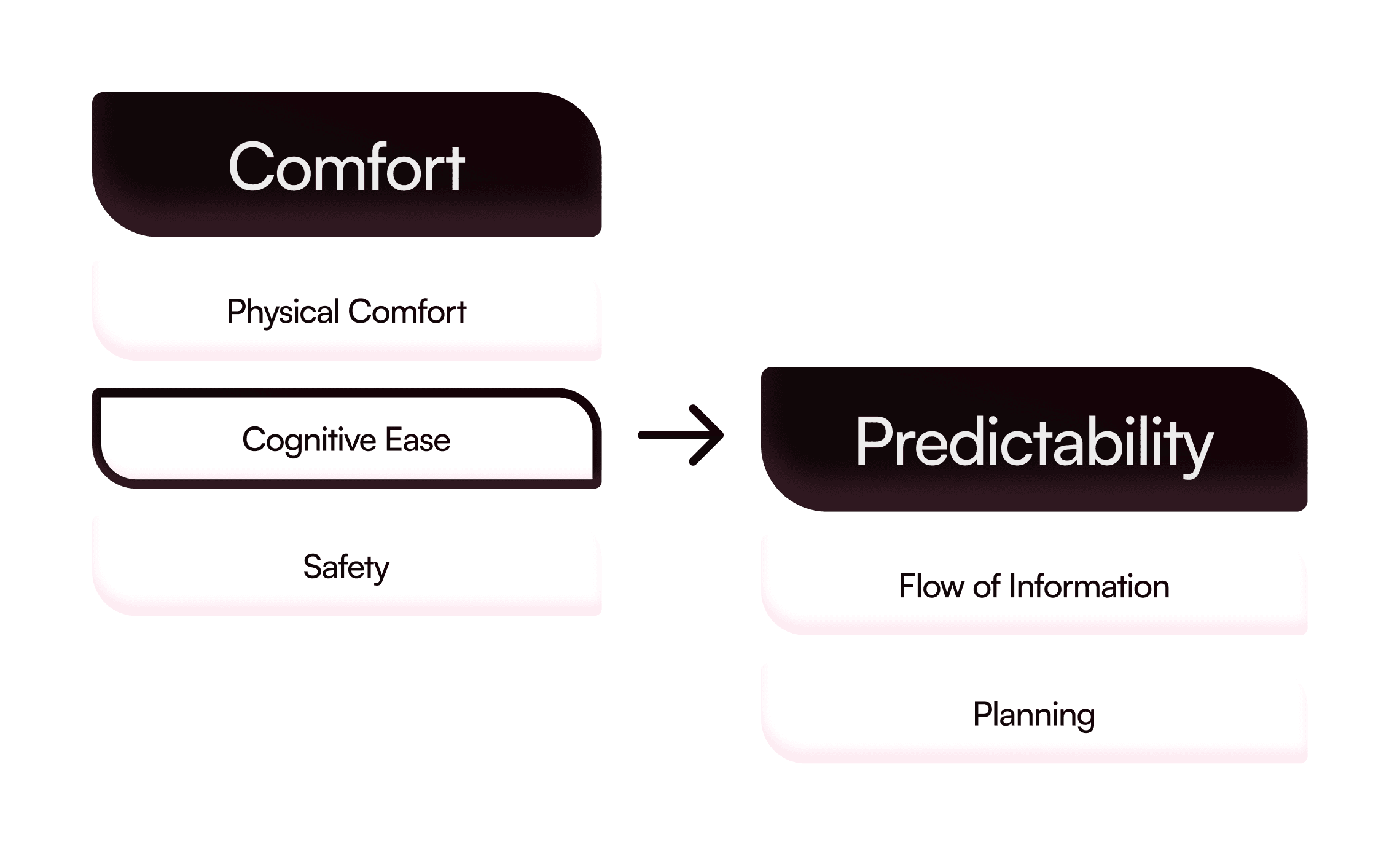
Passengers Care About Comfort
As I organized pieces of information collected from the user interviews, there were some pretty clear themes emerging.
IDEATION + SCENARIO MAPPING WORKSHOP
How might we create a comfortable and relaxing environment, regardless of occupancy and journey length?

At this point, we knew that we needed to focus more on the actual environment and surroundings of the passenger, rather than the efficiency of our bus system.
I setup a scenario mapping workshop to generate some ideas for how this may come to life.
TOUCHPOINTS
Information Available at All Times
Following the scenario mapping workshop, we generated a good amount of ideas to move forward with. Here are the key items that we decided to flesh out.
Enhanced Seat Experience
Each passenger can modify their experience, with a focus on physical and cognitive comfort.
Improved Mobile App
5/6 users interviewed noted consistent use of the current mobile app, with various complaints.
Personalized Wayfinding
Inspired by Delta’s PARALLEL REALITY multi view airport experience, each passenger can see their own journey on the way to the bus stop.
Consistent Flow of Information
To implement a sense of predictability, passengers are empowered with the peace of mind knowing important information such as delays, routes, and other bus specific details.
COMPETITIVE ANALYSIS
The Competition had Very Few Options for Personalization
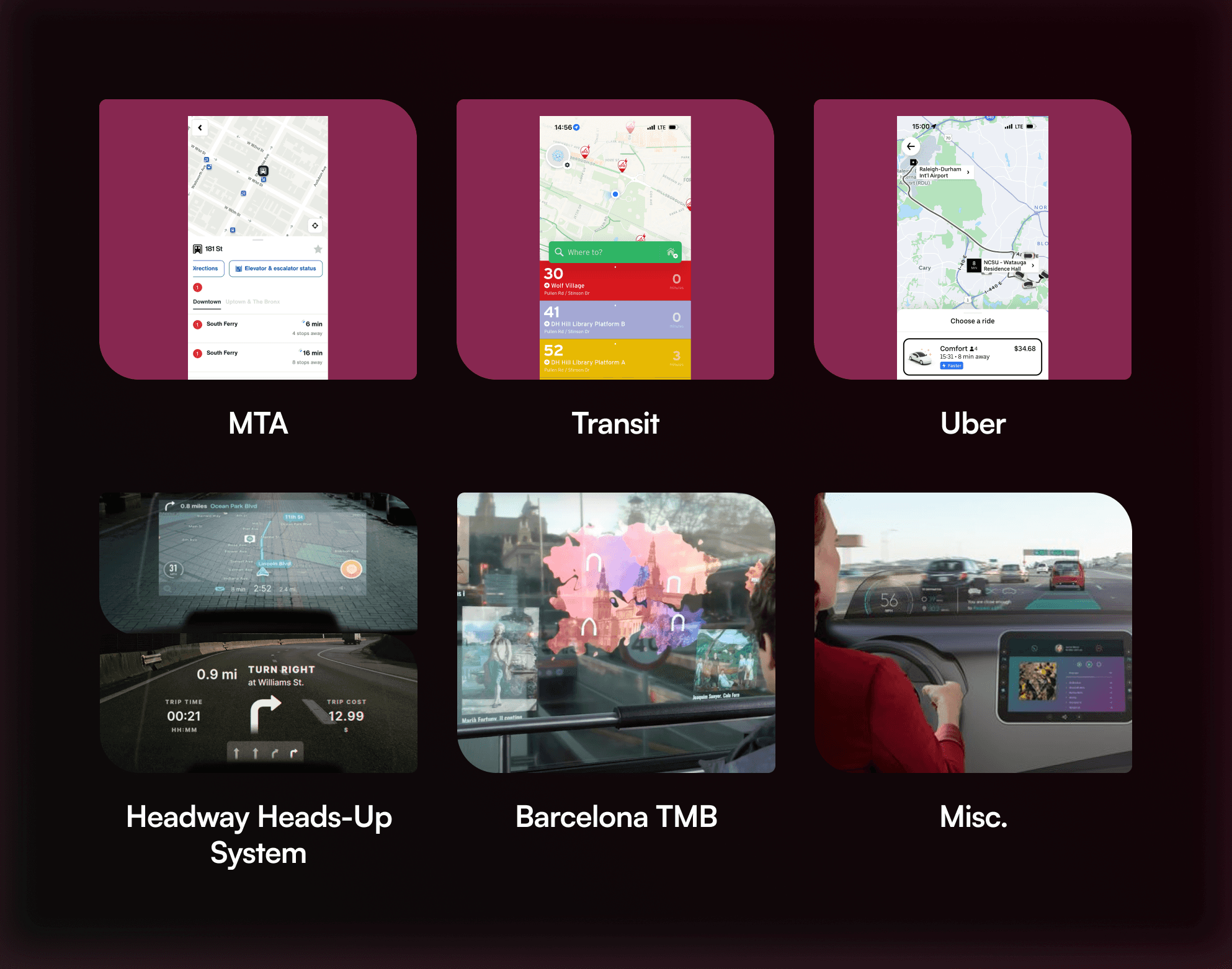
During my informal competitive analysis, I noticed that the competition placed little importance on personalization to each passenger. While this is most likely aligned with current technological limitations, we positioned this as an opportunity for Sojo, which seeks to give each passenger control over their journey, to differentiate itself.
LOW FIDELITY PROTOTYPES
Testing Our Products
USABILITY TESTING AND IMPROVEMENTS
Creating a More Comfortable Experience on Mobile and on the Bus
During usability testing, I had a couple tasks planned for users to work through to evaluate the readiness of these prototypes. Alongside additional questions that popped up, this helped us a lot.
Made Preference Sliders Clear
Remove Bottom Navigation
User Selects Bus Route and Previews
Made New Note Function Clear
FINAL SCREENS
Sojo: The Future of Transportation and Comfort
REFLECTIONS
It's More than Just Point A to Point B
At the start of this project, my teammates and I assumed we would be doing something related to creating a more efficient transportation system. This proved to be a very important lesson in not making assumptions, as we were soon to find out that our target users didn't actually care as much about efficiency as we had anticipated. Instead, users desired a system that fosters predictability, transparency, and above all, comfort.
SOJO
ux/ui
10 weeks
transportation
group project
How does overcrowding lead to further inconvenience on public transit?
Follow buses with real-time information such as occupancy and schedule times.
Integrated bus seat entertainment center brings transparency and relaxation to the passenger.
THE PROBLEM
Passengers Feel a Lack of Comfort, Both Physically and Cognitively.
THE SOLUTION
reframing mobility as a beacon of comfort and predictability.
BACKGROUND
An Imperfect Journey
Various studies have proven that the more passengers that are on a bus, the more time gets added onto delays, boarding times, and getting off. In regard to boarding and getting off, cities including Santiago de Chile (Gibson et al., 1997), Chicago (Milkovits, 2008), Dhaka (Katz and Garrow, 2012), Vancouver (Fletcher and El-Geneidy, 2013) and Sydney (Tirachini, 2013) all found this to be the case. Furthermore, when their are few passengers in comparison to bus capacity, there is less waiting time and increased comfort in travel. This is gone further into detail by Oldfield and Bly (1988).
FIELD STUDIES
Observing Passenger Habits
As the bus approaches
Boarding the bus
About to depart
Passengers crowd around the front entrance.
Passengers fill up the front of the bus, as there are open seats here.
Bus driver waits for people on street walking by to make sure they’re not getting on, even well after departure time.
USER INTERVIEWS
Efficiency not a Priority for Passengers?
I utilized an interview guide to aid the discussion. Here were some key topics we covered:
Walk me through a typical journey of yours from start to finish of taking the bus.
Can you tell me about a time when you thought something along the lines of “I’m never taking the bus again"?
Tell me about the first time you took the bus and why you decided to take the bus.
Lastly, if there was one thing you could change that would make your experience riding the bus better, what would it be?
EMERGING THEMES
Passengers Care About Comfort
As I organized pieces of information collected from the user interviews, there were some pretty clear themes emerging.
IDEATION + SCENARIO MAPPING WORKSHOP
How might we create a comfortable and relaxing environment, regardless of occupancy and journey length?
At this point, we knew that we needed to focus more on the actual environment and surroundings of the passenger, rather than the efficiency of our bus system.
I setup a scenario mapping workshop to generate some ideas for how this may come to life.
TOUCHPOINTS
Information Available at All Times
Following the scenario mapping workshop, we generated a good amount of ideas to move forward with. Here are the key items that we decided to flesh out.
Enhanced Seat Experience
Each passenger can modify their experience, with a focus on physical and cognitive comfort.
Improved Mobile App
5/6 users interviewed noted consistent use of the current mobile app, with various complaints.
Personalized Wayfinding
Inspired by Delta’s PARALLEL REALITY multi view airport experience, each passenger can see their own journey on the way to the bus stop.
Consistent Flow of Information
To implement a sense of predictability, passengers are empowered with the peace of mind knowing important information such as delays, routes, and other bus specific details.
COMPETITIVE ANALYSIS
The Competition had Very Few Options for Personalization
During my informal competitive analysis, I noticed that the competition placed little importance on personalization to each passenger. While this is most likely aligned with current technological limitations, we positioned this as an opportunity for Sojo, which seeks to give each passenger control over their journey, to differentiate itself.
LOW FIDELITY PROTOTYPES
Testing Our Products
USABILITY TESTING AND IMPROVEMENTS
Creating a More Comfortable Experience on Mobile and on the Bus
During usability testing, I had a couple tasks planned for users to work through to evaluate the readiness of these prototypes. Alongside additional questions that popped up, this helped us a lot.
Made Preference Sliders Clear
Remove Bottom Navigation
User Selects Bus Route and Previews
Made New Note Function Clear
FINAL SCREENS
Sojo: The Future of Transportation and Comfort
REFLECTIONS
It's More than Just Point A to Point B
At the start of this project, my teammates and I assumed we would be doing something related to creating a more efficient transportation system. This proved to be a very important lesson in not making assumptions, as we were soon to find out that our target users didn't actually care as much about efficiency as we had anticipated. Instead, users desired a system that fosters predictability, transparency, and above all, comfort.
SOJO
ux/ui
10 weeks
transportation
group project
How does overcrowding lead to further inconvenience on public transit?
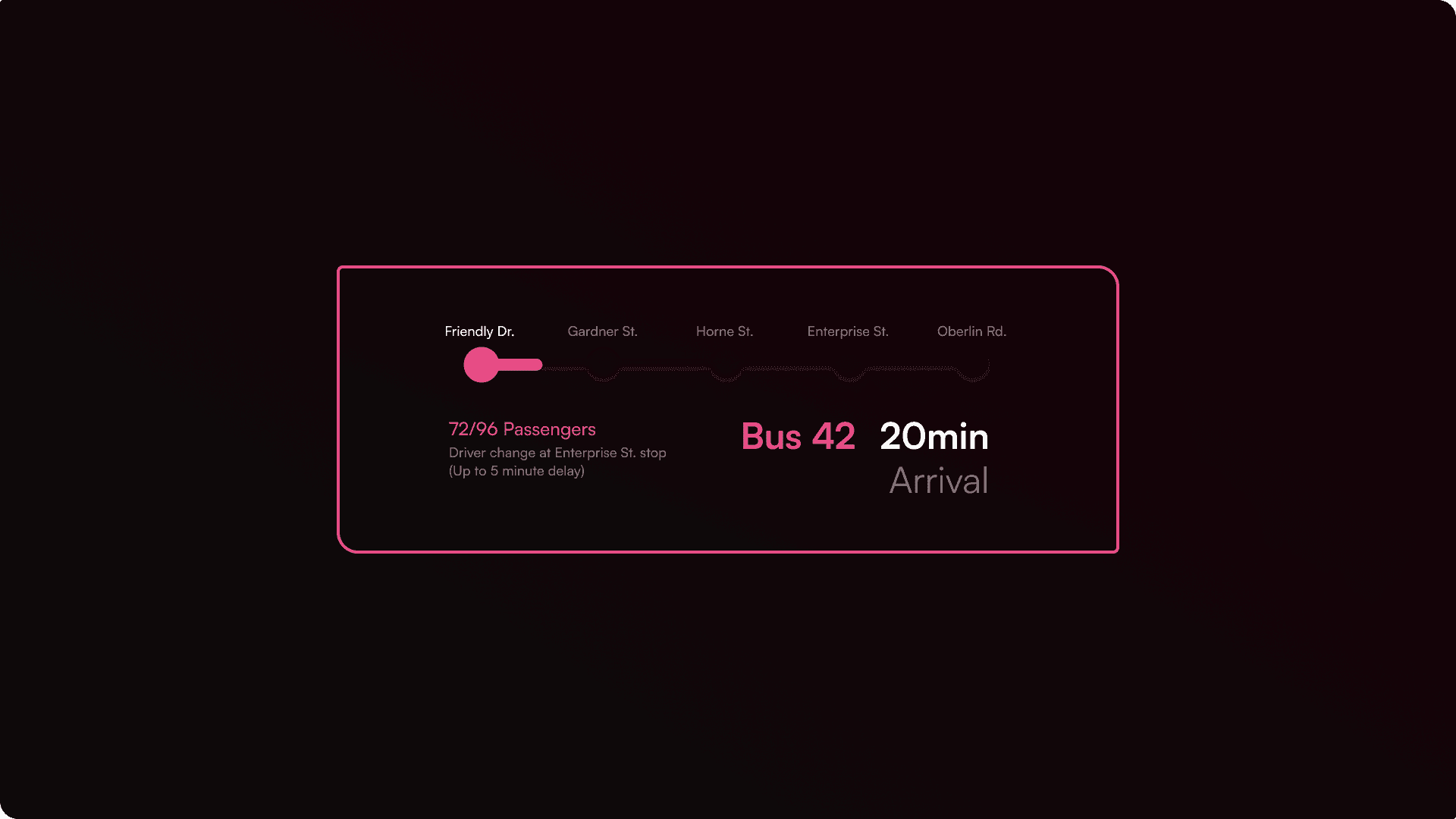
Follow buses with real-time information such as occupancy and schedule times.
Integrated bus seat entertainment center brings transparency and relaxation to the passenger.
THE PROBLEM
Passengers Feel a Lack of Comfort, Both Physically and Cognitively.
THE SOLUTION
reframing mobility as a beacon of comfort and predictability.
BACKGROUND
An Imperfect Journey
Various studies have proven that the more passengers that are on a bus, the more time gets added onto delays, boarding times, and getting off. In regard to boarding and getting off, cities including Santiago de Chile (Gibson et al., 1997), Chicago (Milkovits, 2008), Dhaka (Katz and Garrow, 2012), Vancouver (Fletcher and El-Geneidy, 2013) and Sydney (Tirachini, 2013) all found this to be the case.
Furthermore, when their are few passengers in comparison to bus capacity, there is less waiting time and increased comfort in travel. This is gone further into detail by Oldfield and Bly (1988).
FIELD STUDIES
Observing Passenger Habits
As the bus approaches
Passengers crowd around the front entrance.
Boarding the bus
Passengers fill up the front of the bus, as there are open seats here.
About to depart
Bus driver waits for people on street walking by to make sure they’re not getting on, even well after departure time.
USER INTERVIEWS
Efficiency not a Priority for Passengers?
I utilized an interview guide to aid the discussion. Here were some key topics we covered:
Walk me through a typical journey of yours from start to finish of taking the bus.
Can you tell me about a time when you thought something along the lines of “I’m never taking the bus again"?
Tell me about the first time you took the bus and why you decided to take the bus.
Lastly, if there was one thing you could change that would make your experience riding the bus better, what would it be?
EMERGING THEMES
Passengers Care About Comfort
As I organized pieces of information collected from the user interviews, there were some pretty clear themes emerging.
IDEATION + SCENARIO MAPPING WORKSHOP
How might we create a comfortable and relaxing environment, regardless of occupancy and journey length?
I setup a scenario mapping workshop to generate some ideas for how this may come to life.
At this point, we knew that we needed to focus more on the actual environment and surroundings of the passenger, rather than the efficiency of our bus system.
COMPETITIVE ANALYSIS
The Competition had Very Few Options for Personalization
During my informal competitive analysis, I noticed that the competition placed little importance on personalization to each passenger. While this is most likely aligned with current technological limitations, we positioned this as an opportunity for Sojo, which seeks to give each passenger control over their journey, to differentiate itself.
TOUCHPOINTS
Information Available at All Times
Following the scenario mapping workshop, we generated a good amount of ideas to move forward with. Here are the key items that we decided to flesh out.
Enhanced Seat Experience
Each passenger can modify their experience, with a focus on physical and cognitive comfort.
Improved Mobile App
5/6 users interviewed noted consistent use of the current mobile app, with various complaints.
Personalized Wayfinding
Inspired by Delta’s PARALLEL REALITY multi view airport experience, each passenger can see their own journey on the way to the bus stop.
Consistent Flow of Information
To implement a sense of predictability, passengers are empowered with the peace of mind knowing important information such as delays, routes, and other bus specific details.
LOW FIDELITY PROTOTYPES
Testing Our Products
USABILITY TESTING AND IMPROVEMENTS
Creating a More Comfortable Experience on Mobile and on the Bus
During usability testing, I had a couple tasks planned for users to work through to evaluate the readiness of these prototypes. Alongside additional questions that popped up, this helped us a lot.
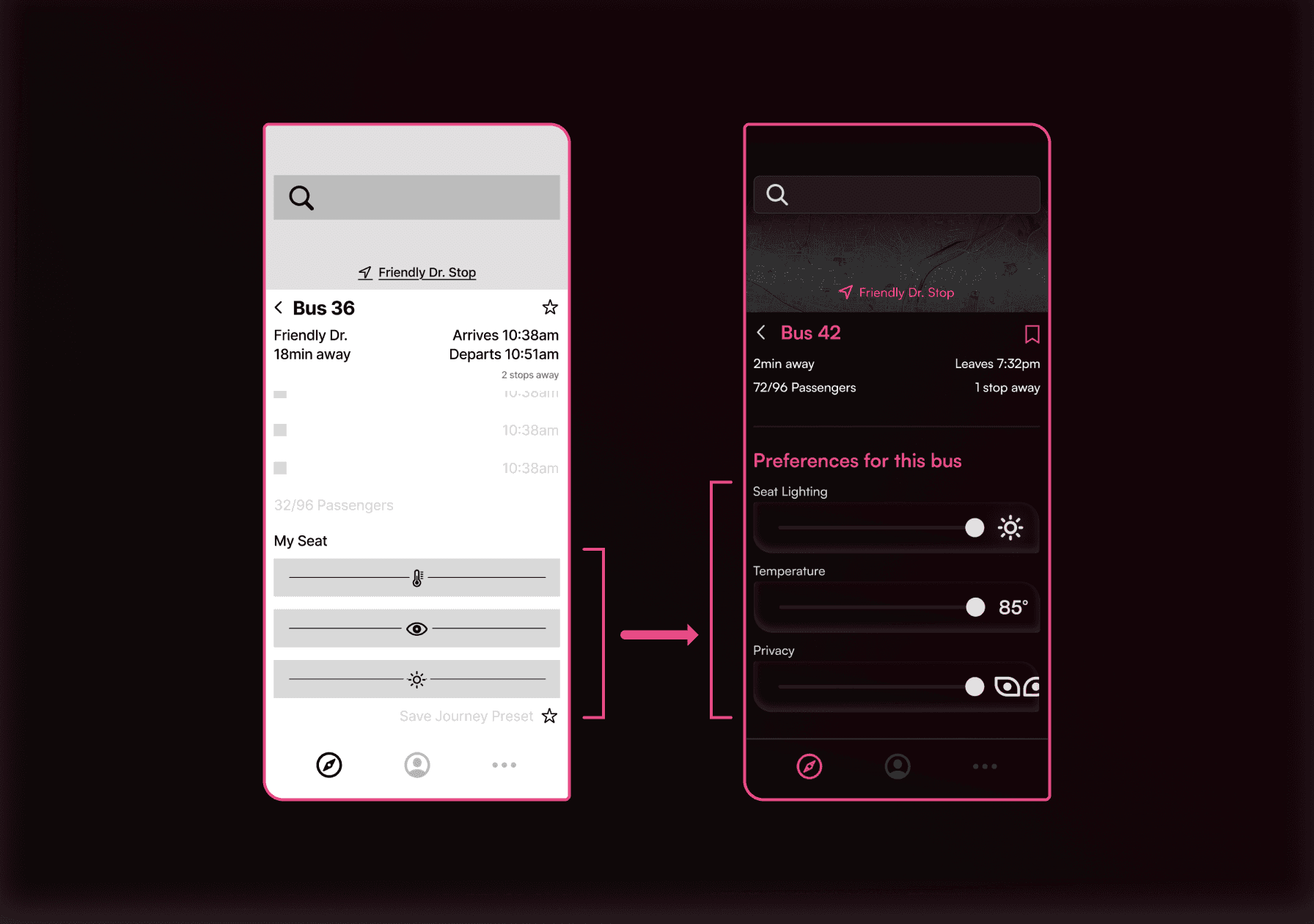
Made Preference Sliders Clear
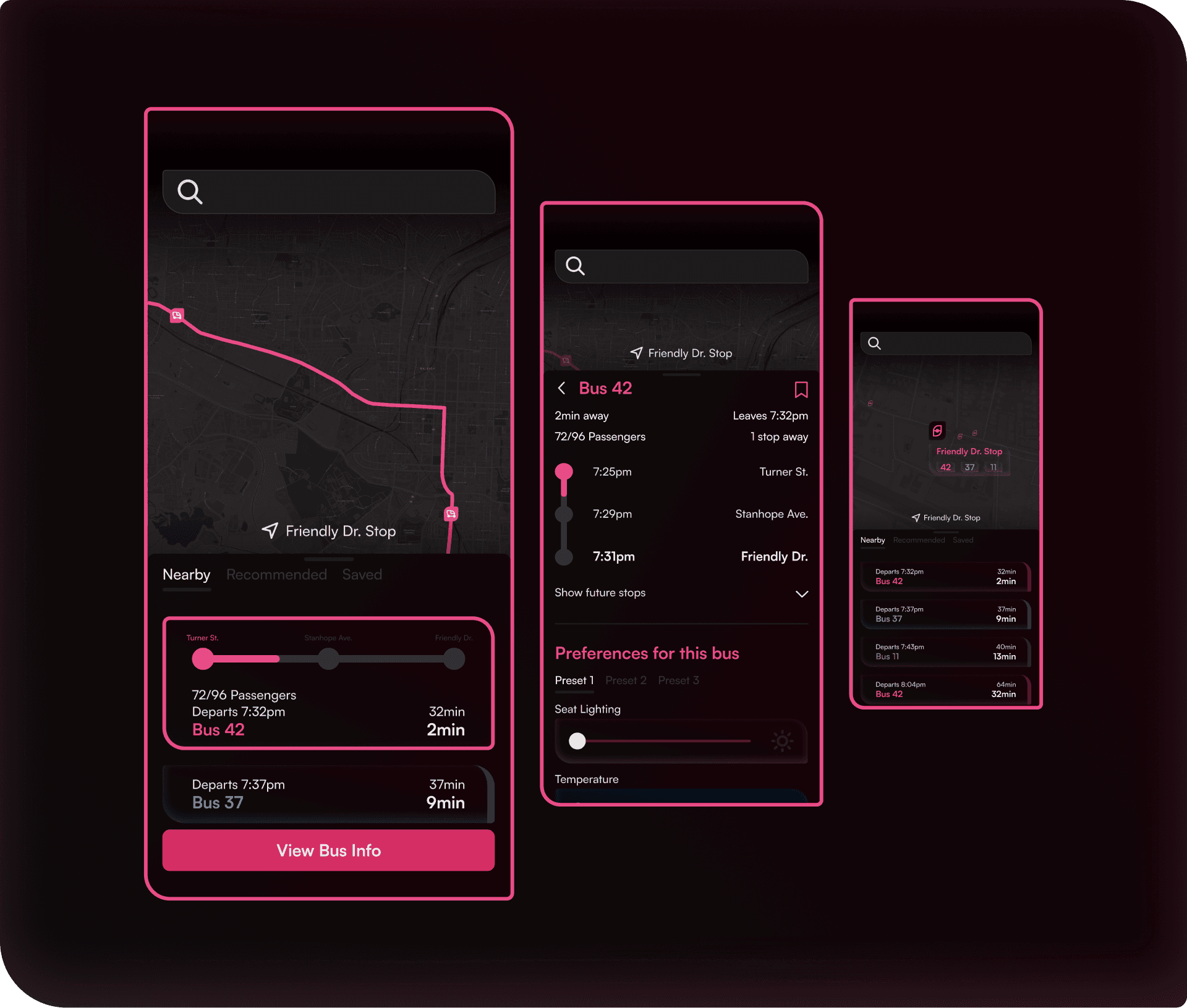
With one of the main features of the app being that users can adjust their seat's settings before they even get on the bus, users expressed confusion when interacting with the initial sliders.
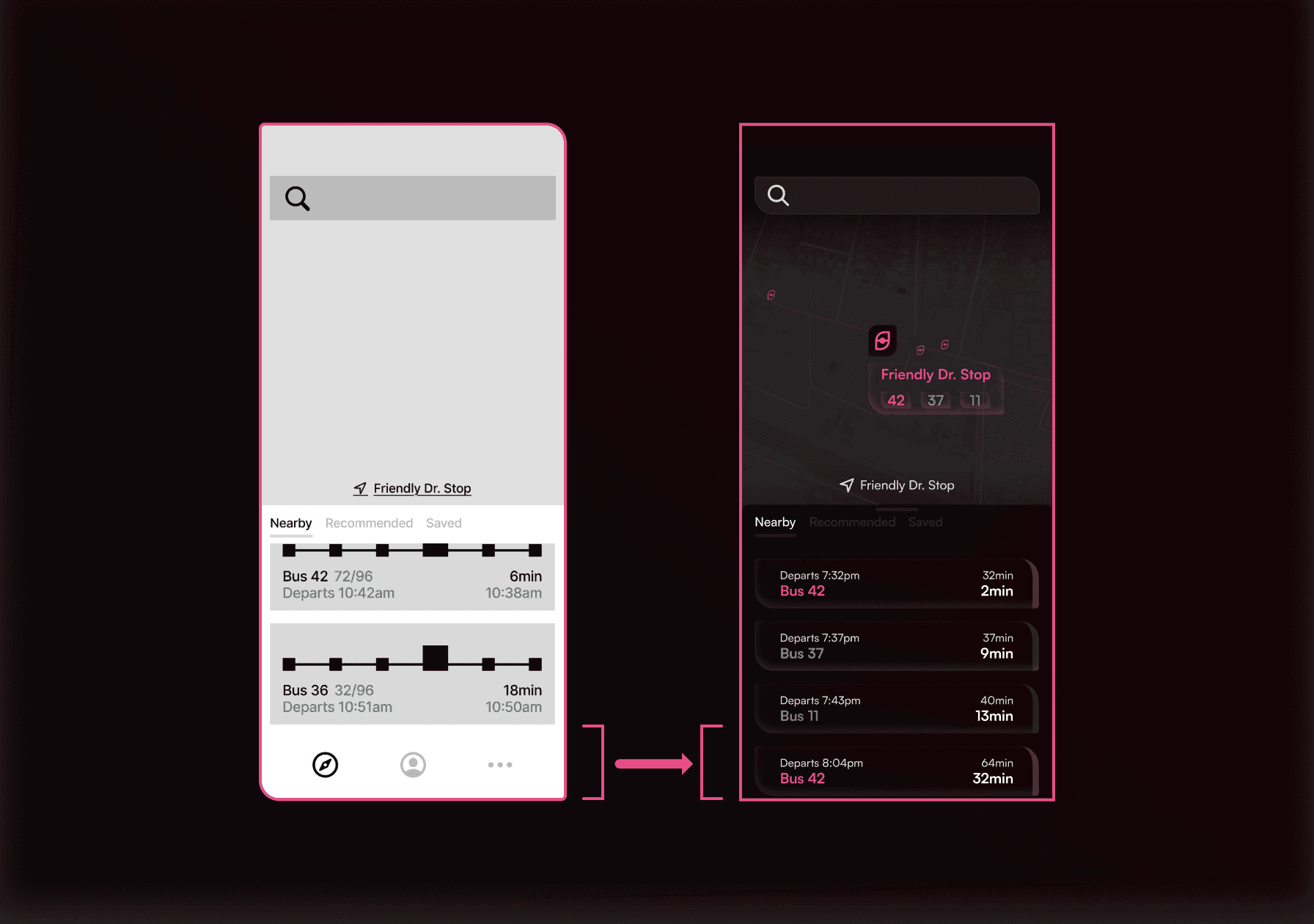
Remove Bottom Navigation
To reduce clutter and create a simplified flow of the app, we removed the bottom navigation as it wasn't needed.
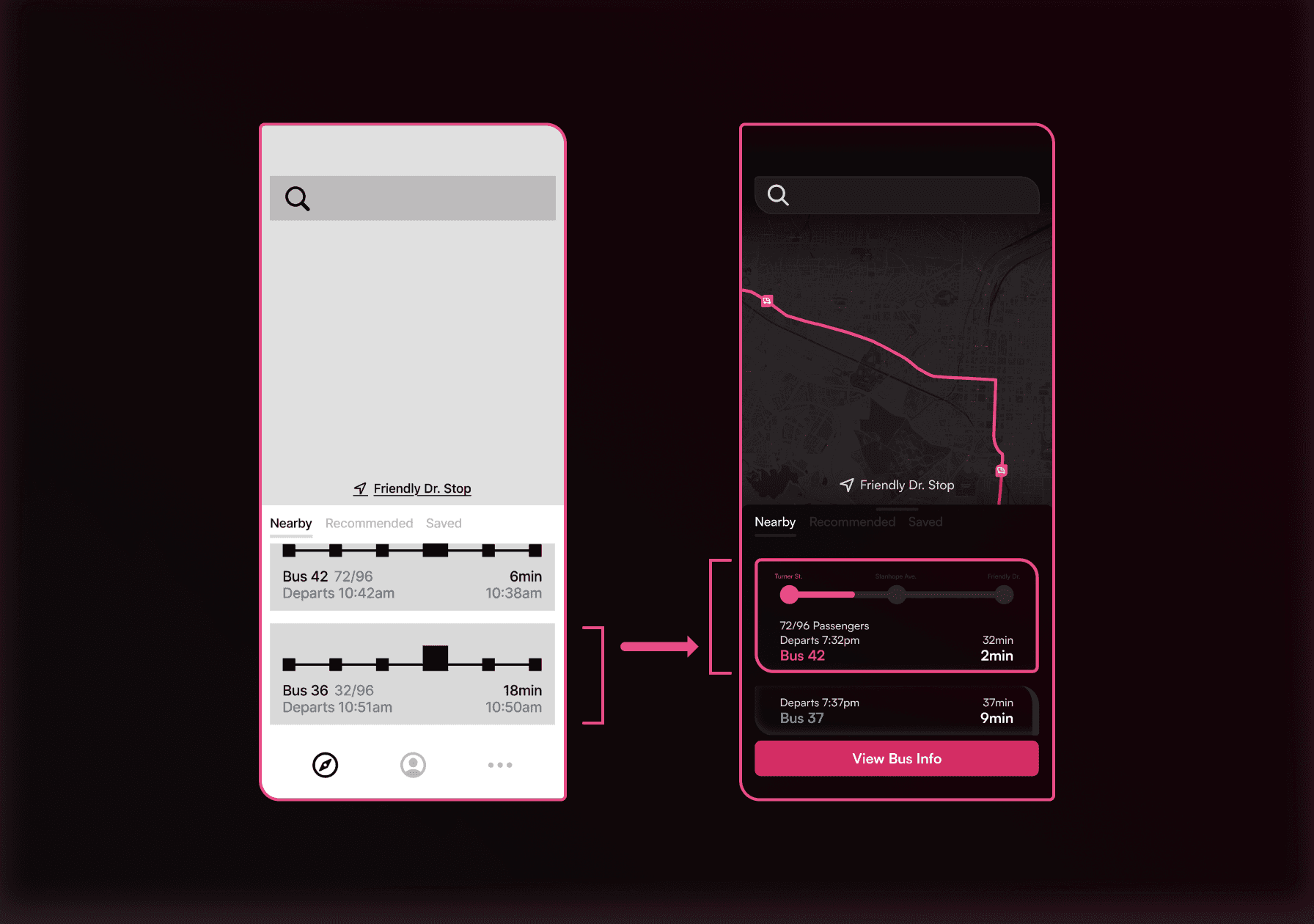
User Selects Bus Route and Previews
The previous interaction pattern sent the user straight into the bus specific screen, without indications or previews of that stop. The new interaction allows users to preview the bus route beforehand.
Made New Note Function Clear
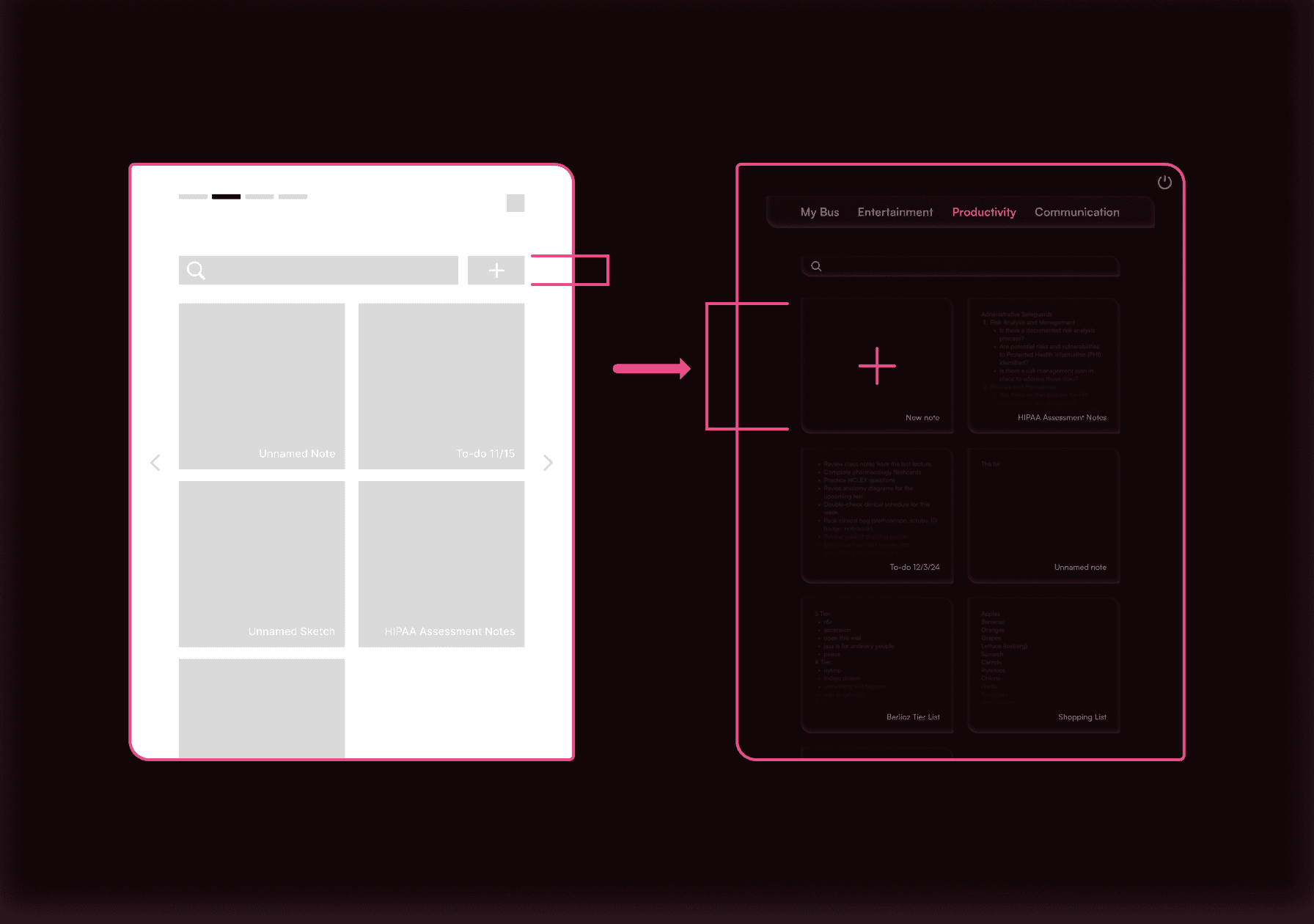
Users were confused on how to create a new sticky note, due to proximity with the search bar.
FINAL SCREENS
Sojo: The Future of Transportation and Comfort
REFLECTIONS
It's More than Just Point A to Point B
At the start of this project, my teammates and I assumed we would be doing something related to creating a more efficient transportation system. This proved to be a very important lesson in not making assumptions, as we were soon to find out that our target users didn't actually care as much about efficiency as we had anticipated. Instead, users desired a system that fosters predictability, transparency, and above all, comfort.